Can I Lose Money on the Bamboo App? The Three Ways It Happens
Yes, you can. Bamboo is an investment platform, not a savings account, and there are three separate ways to lose money on it: the shares you buy can fall, the naira can strengthen against the dollar, and fees can quietly eat a small or frequently traded balance.
None of those means the app is a scam. They are how investing works everywhere. What follows is each one explained plainly, and what you can actually do about them.
1. The Shares Themselves Can Fall
This is the obvious one and still the one people underestimate. When you buy a fractional share of a US company, you own a slice of that company. If the company disappoints, the share price drops, and your slice is worth less.
US technology shares in particular move sharply. A single earnings announcement can move a large company by ten per cent in a day. If you invested ₦100,000 and the share falls ten per cent, you have ₦90,000 worth, and nothing is broken.
The loss only becomes real when you sell. That distinction matters, because the most common way Nigerians lose money on investment apps is not a market crash. It is selling during one.
2. The Naira Can Move Against You
This is the risk almost nobody plans for, because Nigerians are used to the naira falling. It does not only fall.
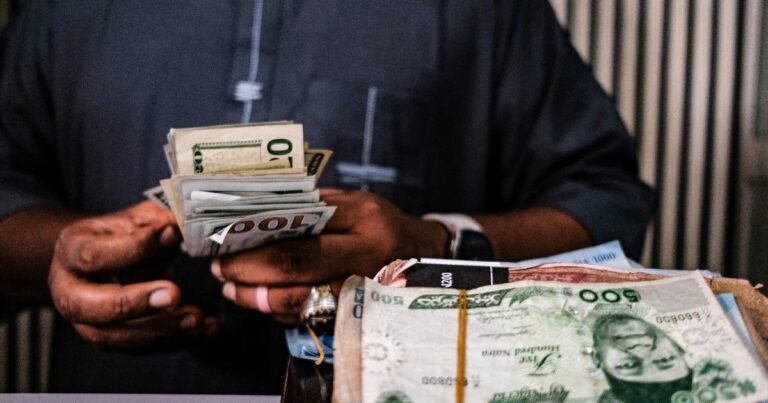
Your Bamboo balance is in dollars. When you withdraw, it converts back to naira. If the naira has weakened since you invested, you gain on the conversion. If the naira has strengthened, you lose on it, even if your shares went up.
That is not hypothetical. The naira firmed to around ₦1,350 to the dollar on the official market in August 2026, having been considerably weaker earlier in its recent history. Anyone who converted at a weaker rate and withdrew at a stronger one felt the difference regardless of what their shares did.
You are making two bets at once: on the asset, and on the currency. Both can go your way, both can go against you, and they do not always move together.
3. Fees Can Eat a Small Balance
| Fee | Amount | Why it matters |
|---|---|---|
| US stock trade fee | About 1.5% | Charged when you buy and again when you sell |
| Naira withdrawal | ₦45 | Small, but frequent withdrawals add up |
| USD withdrawal | $45 flat | On a $500 withdrawal that is nine per cent |
Work through it. Buy $100 of a share at 1.5 per cent, sell it later at 1.5 per cent, and the share must rise about three per cent before you break even. Trade in and out repeatedly on small amounts and fees will beat you before the market gets a chance to.
The flat $45 dollar withdrawal fee is the sharpest edge. It is the same amount whether you withdraw $500 or $5,000, which makes frequent small dollar withdrawals an expensive habit.
4. What Is Not a Way to Lose Money Here
Being clear about this protects you from the wrong worry.
- The platform taking your money. Bamboo is registered with the Securities and Exchange Commission in Nigeria, which means it answers to a regulator and there is a formal complaints route.
- Your BVN being used to access your bank. A BVN verifies identity. It is not a password to your account and it does not authorise transactions.
- A pending withdrawal. Naira withdrawals below ₦1,000,000 can be instant, others take about a business day, and dollar withdrawals to foreign accounts commonly take five to seven business days. Slow is not lost.
Regulation covers how the operator behaves. It does not refund a share that fell. Those are two different protections and only one of them exists.
5. How to Reduce the Chance of Losing
Invest money you will not need soon
Anything you might need within a year does not belong in shares, in any country. Markets recover on their own schedule, not yours.
Buy ETFs rather than single companies
An ETF spreads your money across many companies at once. One company failing hurts far less. For a beginner this is the single most effective risk reduction available.
Trade rarely
Every round trip costs about three per cent in fees. Fewer, larger, longer held positions beat frequent small ones on cost alone, before you consider that frequent traders tend to buy high and sell low.
Withdraw dollars in meaningful amounts
Because the dollar withdrawal fee is flat, waiting until the balance justifies the $45 makes a real difference to what you keep.
Decide in advance what you will do in a fall
Write it down before it happens. The plan you make calmly is better than the one you make watching a red screen.
6. So Is It Worth the Risk?
That depends on what you are comparing it with. Naira in a current account loses to inflation with certainty: prices rose 15.43 per cent in the year to July 2026. Treasury bills at 15 to 16 per cent roughly break even against that. Shares can beat inflation over years and can also fall hard over months.
The choice is not between risk and safety. It is between a certain slow loss and an uncertain outcome that has historically been better over long periods. Which suits you depends on when you need the money.
7. A Worked Example: ₦135,000 Invested
Numbers make this concrete. Say you invest ₦135,000 when the rate is ₦1,350 to the dollar, which gives you roughly $100 before fees. A 1.5 per cent buying fee leaves about $98.50 working for you.
Here is the same investment a year later under three different outcomes. These are illustrations, not predictions.
| Scenario | Share result | Rate at withdrawal | Roughly what you get back |
|---|---|---|---|
| Both go your way | Up 10%, about $108 | Naira weaker at ₦1,500 | About ₦162,000, a clear gain |
| Shares up, naira up too | Up 10%, about $108 | Naira stronger at ₦1,200 | About ₦130,000, a loss despite the shares rising |
| Shares down | Down 15%, about $84 | Rate unchanged at ₦1,350 | About ₦113,000, a clear loss |
The middle row is the one worth staring at. The investment did what you hoped, the share went up ten per cent, and you still came out behind because the currency moved the other way. Fees and the 1.5 per cent on the way out have not even been counted in those figures.
This is why dollar investing suits money with a dollar purpose. If you are saving toward school fees abroad, foreign software subscriptions or travel, a stronger naira does not hurt you in the same way, because your future costs fall with it.
Frequently Asked Questions
Can I lose all my money on Bamboo?
Losing everything would require the shares you own to become worthless, which is possible with a single small company and very unlikely with a diversified ETF. Partial losses, on the other hand, are normal and should be expected.
Does Bamboo guarantee returns?
No, and any platform that guarantees investment returns should be treated with suspicion. Returns depend on markets, which nobody controls.
What happens to my money if Bamboo shuts down?
Assets are held through custodians and the platform is SEC registered, which is exactly why regulation matters. Read the terms to see who holds your assets and in whose name.
Is my money safer in naira or dollars?
Neither is safe in every scenario. Naira loses to inflation, dollars lose if the naira strengthens. Holding some of each spreads that risk rather than eliminating it.
Why did my balance drop when the market was closed?
Currency movement, or a price update at market open. A dollar balance changes in naira terms whenever the exchange rate moves, regardless of the market.
Should I sell when prices fall?
Falling prices are when losses become permanent, because selling converts a paper loss into a real one. Decide your rules before a fall, not during one.
Conclusion
Yes, you can lose money on Bamboo: through the market, through the exchange rate, and through fees. The first two are the price of investing at all, and the third is the one entirely within your control.
Buy diversified, trade rarely, withdraw dollars in meaningful amounts, and only invest money you can leave alone. Figures here were checked in August 2026, and both fees and exchange rates change.
Disclaimer: this article is general information, not financial advice. We are not licensed financial advisers and are not regulated by the SEC or the Central Bank of Nigeria. Rates, fees, minimums and a platform’s regulatory status change, and the figures here were accurate on the date shown above. Investing carries risk, including losing money, and past performance does not indicate future results. Confirm current terms with the institution and speak to a licensed adviser before committing money. See our full disclaimer.