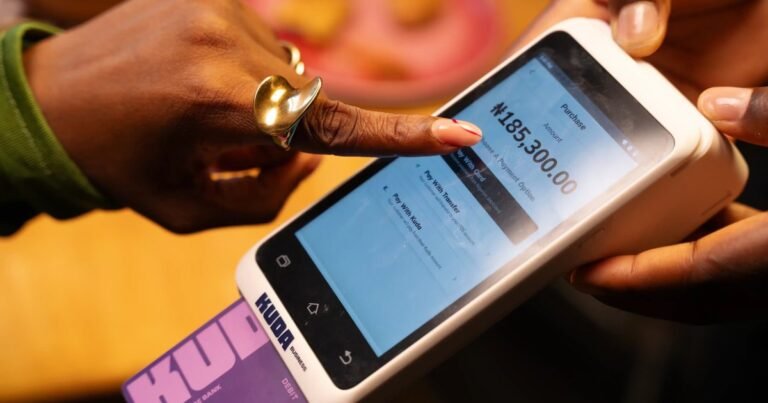
Best Banking Apps in Nigeria: OPay, Kuda, Moniepoint and the Bank Apps Compared
Nigerian banking apps split into two groups that behave nothing alike. Digital banks, meaning OPay, Kuda, PalmPay and Moniepoint, are built around cheap, fast transfers and charge no maintenance fee. Traditional bank apps, meaning GTWorld, Zenith Mobile, AccessMore, First Mobile and UBA, sit on top of a full commercial bank and do things the digital ones cannot.
Most people who are happy with their banking use one of each. Here is what each group is genuinely good at.
Downloads, and What They Tell You
| App | Type | Rough download scale | Its real strength |
|---|---|---|---|
| OPay | Digital | About 50 million | Agent network and everyday payments |
| Kuda | Digital | About 10 million | Saving, budgeting, no maintenance fee |
| Moniepoint | Digital | About 10 million | Business banking and POS |
| Zenith Mobile | Traditional | 5 million plus | Full commercial banking |
| GTWorld | Traditional | Millions | Interface quality, rebuilt in recent years |
| AccessMore | Traditional | Millions | Salary accounts and branch backed services |
Download counts are approximate and taken from public app store figures in 2026. They measure reach, not quality, and a large number partly reflects agents installing the app on customers’ phones.
OPay: Built for Moving Money
OPay’s dominance comes from the agent network as much as the app. In parts of the country where a bank branch is an hour away, an OPay agent is on the next street, and that physical layer is what the download figure really represents.
As an app it is best at the ordinary things: transfers, airtime, bills, and cashing in or out through an agent. It is not where you keep savings you care about, and it is not built for anything a bank would call a relationship, such as a loan against your salary or a domiciliary account.
Kuda: The One People Save With
Kuda built its reputation on no maintenance fees and free transfers within a monthly allowance, then added budgeting and a fixed savings product advertising rates around 15 per cent. Against July 2026 inflation of 15.43 per cent, that is a product that roughly preserves value rather than growing it, which is still far better than a current account.
Its weakness is the same as every digital bank: when something goes wrong, there is no branch to walk into. If you are comfortable resolving problems in an app, this is not a problem. If you are not, it is the whole problem.
Moniepoint: Built for Businesses
Moniepoint approached the market from the merchant side, through POS terminals, and its personal banking grew out of that. It shows in what the app is good at: settlement, transaction records, and tools a small business actually needs.
If you run a shop, take card payments or need clean records for stock and staff, Moniepoint is built for you in a way the others are not. As a purely personal account it is capable but unremarkable.
PalmPay: Rewards and Reach
PalmPay competes on cashback, referral rewards and an agent network of its own. The rewards are real, and they are also a customer acquisition cost that can change whenever the company decides it has enough customers.
Treat any app chosen for its bonus structure as a temporary arrangement. Choose it for the transfer reliability and the agent coverage, and treat the rewards as a bonus rather than the reason.
The Traditional Bank Apps
GTWorld, Zenith Mobile, AccessMore, First Mobile and UBA’s app have all been rebuilt in recent years, and the gap in interface quality that once made fintech apps obviously better has narrowed considerably.
What they still offer that digital banks do not:
- Domiciliary accounts. If you receive dollars, you need a commercial bank.
- Salary based lending. Overdrafts and salary advances are priced on a relationship a digital bank does not have with you.
- Branch escalation. When a transaction fails and the app cannot fix it, a branch and a named officer resolve things that support tickets do not.
- Corporate and international transfers. Anything involving SWIFT, trade documents or large sums runs through a commercial bank.
- Reference letters and statements that embassies and landlords accept without argument.
Fees and Limits: What Applies to Everyone
Some charges are set by regulation rather than by the app, so switching does not avoid them.
- Stamp duty of ₦50 applies to transfers above ₦10,000 regardless of which app you use.
- Transfer limits follow your KYC tier, not the app’s preference. A partially verified account has low daily limits everywhere, and full verification with a valid ID and BVN raises them.
- Maintenance fees are where digital banks genuinely differ. OPay, Kuda, PalmPay and similar charge none, while commercial banks apply account maintenance charges on current accounts.
- Free transfer allowances reset monthly on digital banks. Past the allowance, per transfer charges apply.
Which Combination to Use
| If you | Use this | And this |
|---|---|---|
| Earn a salary and receive dollars sometimes | Your salary bank app | Kuda for savings |
| Run a small shop | Moniepoint | A commercial bank for lending |
| Send money constantly, small amounts | OPay or PalmPay | Any commercial bank for documents |
| Live far from a branch | OPay for the agent network | A traditional app for escalation |
| Mostly want to save | Kuda or a money market fund | Your existing bank |
When You Are Debited and the Money Does Not Arrive
This is the most common banking complaint in Nigeria and the one every app review ignores. A transfer leaves your account, the recipient sees nothing, and the app shows the transaction as pending or successful.
Most of these are settlement delays rather than lost money, and they resolve on their own. What matters is knowing the sequence so you do not make it worse by sending the payment twice.
- Do not repeat the transfer. A duplicate is far harder to recover than a delayed one, because the second payment is legitimate and the recipient has it.
- Get the session ID. Every interbank transfer generates one, and it is the reference that lets either bank trace the payment. Screenshot the receipt.
- Log the complaint in the app first, with the session ID, and note the ticket number. Banks work to defined reversal timelines for failed transfers and the clock starts when you report it.
- Escalate to the receiving bank if the money left your account and landed nowhere. Where a wrong account number was used and the funds have been credited, recovery depends on that account holder, which is why account name confirmation before sending matters more than any app feature.
- Escalate to the CBN consumer protection channel if the bank misses its own timeline. Banks respond differently once a complaint exists outside their own system.
The practical defence is boring and effective. Confirm the account name before sending, keep alerts on so you notice a debit immediately, and keep a second bank so a settlement problem at one does not leave you unable to pay for anything.
Security Habits That Matter More Than the App
- Turn on transaction alerts on every account, and read them. Fraud is usually caught by the customer, not the bank.
- Never approve a transfer somebody talks you through on a phone call, including a caller claiming to be from the bank.
- Use the app’s own biometric lock rather than relying on your phone’s lock screen alone.
- Keep a second bank. Outages happen, and having every naira behind one login is the actual risk.
- Report a lost phone to the bank before you replace the SIM, because SIM swap is how most account takeovers start.
Questions People Ask
Which is the best banking app in Nigeria?
For everyday transfers and agent access, OPay. For saving without fees, Kuda. For business, Moniepoint. For anything involving dollars, lending or documents, a commercial bank app such as GTWorld, Zenith or AccessMore.
Are digital banks like Kuda and OPay safe?
They are licensed and deposits are insured within NDIC limits, the same as any bank. The practical difference is recourse: problems are resolved in an app rather than at a branch, which suits some people and frustrates others.
Why was I charged ₦50 on a transfer?
That is stamp duty, applied to transfers above ₦10,000. It is a regulatory charge rather than a bank one, so no app avoids it.
Can I open a domiciliary account on a digital bank?
Generally no. Domiciliary accounts, dollar transfers and SWIFT services are commercial bank territory, which is why most people keep at least one traditional account.
Why are my transfer limits so low?
Limits follow your KYC tier. Complete full verification with a valid ID and BVN, and the daily limit rises. This is set by regulation and applies across banks.
Do digital banks charge maintenance fees?
The main ones advertise none, which is their clearest advantage over commercial current accounts. Free transfer allowances still reset monthly, and charges apply beyond them.
Is Kuda 15 per cent savings a good return?
It roughly matches inflation, which was 15.43 per cent in July 2026, so it protects value rather than growing it. Money market funds and treasury bills are in similar territory.
The Short Version
Digital banks win on cost, speed and agent reach. Commercial banks win on dollars, lending, documents and having somewhere to go when something breaks. The sensible setup is one of each, full KYC on both, and alerts switched on everywhere.
Before You Switch
Fees, limits and rates quoted here were current in August 2026 and change often. Check the in app fee schedule before moving your salary anywhere, and never let one login hold everything you have.
Disclaimer: this article is general information, not financial advice. We are not licensed financial advisers and are not regulated by the SEC or the Central Bank of Nigeria. Rates, fees, minimums and a platform’s regulatory status change, and the figures here were accurate on the date shown above. Investing carries risk, including losing money, and past performance does not indicate future results. Confirm current terms with the institution and speak to a licensed adviser before committing money. See our full disclaimer.